Planning Your First Trip to South Korea: A Detailed Itinerary for 7 Days
Planning your first trip to South Korea involves understanding key logistical elements and having a structured itinerary. This guide provides a day-by-day plan for a 7-day trip, focusing on popular destinations and practical advice for first-time visitors.
Key Takeaways
- Focus your 7-day itinerary on Seoul and a day trip to a nearby historical site for a balanced first experience.
- Utilize South Korea's efficient public transportation system, particularly the subway and KTX trains.
- Book accommodations and popular attraction tickets in advance, especially during peak seasons.
- Familiarize yourself with basic Korean phrases and cultural etiquette to enhance your interactions.
- Consider purchasing a T-Money card for easy transit payments and exploring local SIM card options for connectivity.
Day 1: Arrival in Seoul & Gyeongbokgung Palace
Upon arrival at Incheon International Airport (ICN), the most efficient way to reach Seoul is via the AREX Express train, which takes approximately 43 minutes to Seoul Station. From Seoul Station, you can transfer to the subway system to reach your accommodation. For your first day, immerse yourself in history at Gyeongbokgung Palace, the largest and most beautiful of Seoul's five grand palaces. Allow at least 2-3 hours to explore its grounds, including the National Folk Museum of Korea located within the palace complex.
Getting to Gyeongbokgung
Take Seoul Subway Line 3 to Gyeongbokgung Station (Exit 5). The palace entrance is directly across the street.
Tip for First-Timers
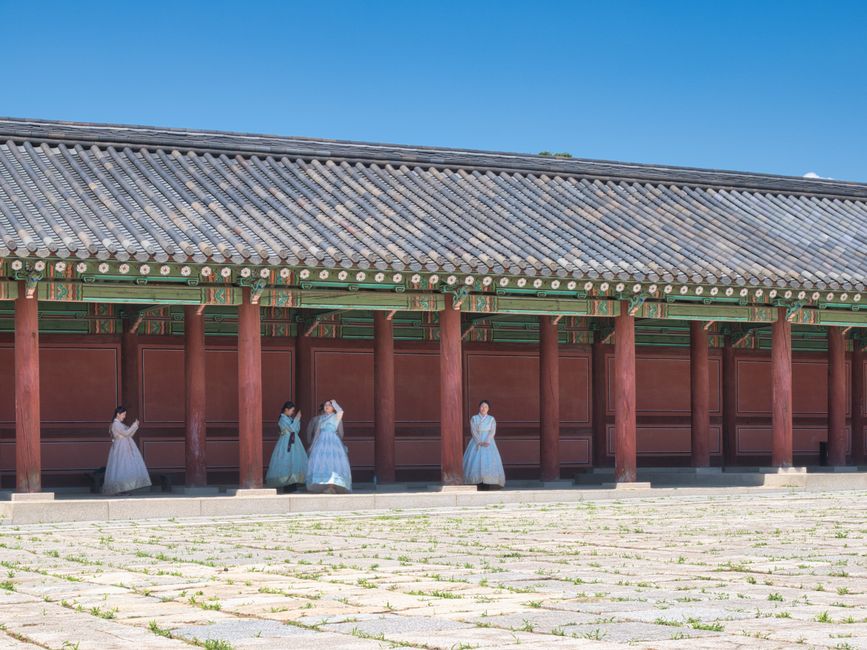
Consider renting a Hanbok (traditional Korean clothing) near the palace. Wearing a Hanbok grants you free entry to Gyeongbokgung and other royal palaces, and it makes for fantastic photos.
Day 2: Bukchon Hanok Village & Insadong Culture Street
Dedicate your second day to exploring Seoul's traditional charm. Begin with Bukchon Hanok Village, a preserved residential area with traditional Korean houses (hanoks). Wander through its narrow alleys and enjoy the picturesque views. Afterwards, head to Insadong, a vibrant street known for its traditional crafts, tea houses, art galleries, and street food. This area is perfect for souvenir shopping and experiencing authentic Korean culture.
What to Do in Bukchon
Walk through the alleys, admire the architecture, and visit the Bukchon Traditional Culture Center for insights into hanok life. Remember that this is a residential area, so maintain a quiet demeanor.
Insadong Highlights
Look for Ssamziegil, a unique shopping complex with artisan shops, and sample traditional Korean teas at one of the many tea houses. Don't miss trying street snacks like hotteok (sweet pancakes).
Day 3: Myeongdong Shopping & N Seoul Tower
Experience the bustling energy of Myeongdong, Seoul's premier shopping district, famous for its cosmetics, fashion, and street food. Spend your morning and early afternoon exploring the countless shops and trying various street food delicacies. As the evening approaches, make your way to Namsan Park to ascend N Seoul Tower. The tower offers panoramic views of the city, especially stunning at sunset and after dark.
Myeongdong Essentials
Be prepared for crowds, especially on weekends. Many shops offer tax refunds for purchases over a certain amount.
N Seoul Tower Access
You can hike up Namsan Mountain, take a public bus, or use the Namsan Cable Car. The cable car offers a scenic ride to the base of the tower.
Day 4: Day Trip to the Demilitarized Zone (DMZ)
A visit to the Korean Demilitarized Zone (DMZ) offers a unique and somber perspective on the Korean War and the division of the peninsula. This is a highly recommended day trip for those interested in modern Korean history. Several tour operators offer guided tours from Seoul, which typically include visits to the Joint Security Area (JSA - if available), infiltration tunnels, and observation posts.
DMZ Tour Booking
Book your DMZ tour well in advance, as availability can be limited. Ensure you choose a reputable tour operator. Tours usually depart from Seoul in the morning and return in the late afternoon.
What to Expect
Tours involve significant walking and security checks. Dress respectfully and be prepared for a solemn experience. Photography may be restricted in certain areas.
Day 5: Gangnam Exploration & COEX Aquarium
Venture south of the Han River to explore the affluent district of Gangnam, popularized by the hit song. Visit the Starfield Library at COEX Mall, an impressive architectural space filled with thousands of books. Afterwards, explore the COEX Aquarium, one of Korea's largest aquariums, housing a diverse range of marine life. Gangnam also offers high-end shopping and trendy cafes.
Starfield Library Tips
The library is a popular spot for photos, so be mindful of others. It's a great place to relax and read or use the free Wi-Fi.
COEX Aquarium Experience
Allocate at least 2-3 hours for the aquarium. It's an excellent indoor activity, especially on a rainy day.
Day 6: Hongdae Art Scene & Han River Cruise
Immerse yourself in Seoul's youthful and artistic side in Hongdae, an area known for its street art, indie music scene, and unique fashion boutiques. Explore the vibrant streets, catch a street performance, and browse the independent shops. In the evening, enjoy a relaxing Han River cruise. This offers a different perspective of the city, with illuminated bridges and cityscapes.
Hongdae Activities
Check out the Trickeye Museum or explore the various themed cafes. Hongdae is particularly lively on weekends.
Han River Cruise Options
Several companies operate cruises from various piers along the Han River. Some offer dinner or entertainment options.
Day 7: Departure
Depending on your flight schedule, you might have time for some last-minute souvenir shopping or a final Korean meal. Head back to Incheon International Airport (ICN) via the AREX train or an airport limousine bus. Allow ample time for travel and airport procedures.
Departure Logistics
Check the operating hours and schedules for your chosen transportation to the airport. It's advisable to leave for the airport at least 3-4 hours before your flight departure.
Transportation in Seoul
Seoul boasts an extensive and efficient public transportation network. The subway system is the most convenient way to get around the city, with clear signage in Korean and English. Buses are also a viable option, though they can be more complex for first-time visitors.
Using the T-Money Card
A T-Money card is a rechargeable smart card that can be used on subways, buses, and even in some taxis and convenience stores. You can purchase and top up these cards at convenience stores and subway stations. This is highly recommended for ease of travel.
KTX for Intercity Travel
If you plan to visit other cities in South Korea, the KTX high-speed train is the most efficient and comfortable option. Tickets can be booked online in advance or at train stations.
Accommodation Options
Seoul offers a wide range of accommodation to suit every budget. Options include:
- Hotels: From luxury international chains to boutique hotels, widely available in areas like Myeongdong, Gangnam, and near Seoul Station.
- Guesthouses/Hostels: Budget-friendly options, often with a communal atmosphere, popular in areas like Hongdae and Itaewon.
- Hanok Stays: For a unique cultural experience, consider staying in a traditional Korean house, particularly in areas like Bukchon.
Booking Tips
Book your accommodation at least 2-3 months in advance, especially if traveling during peak seasons like spring (cherry blossoms) or autumn (fall foliage).
Practical Tips for First-Time Visitors
Here's a checklist to help you prepare for your trip:
Pre-Trip Checklist
- Visa Requirements: Check if you need a visa for South Korea based on your nationality.
- Flights and Accommodation: Book these well in advance.
- Travel Insurance: Ensure you have adequate coverage.
- Currency Exchange: South Korean Won (KRW). Exchange some currency upon arrival or use ATMs. Credit cards are widely accepted, but it's good to have some cash.
- Connectivity: Consider renting a portable Wi-Fi egg or purchasing a local SIM card at the airport for easy navigation and communication.
- Basic Korean Phrases: Learning a few phrases like 'Annyeonghaseyo' (Hello), 'Kamsahamnida' (Thank you), and 'Juseyo' (Please give me) can be very helpful.
- Power Adapter: South Korea uses Type C plugs (two round pins) and a voltage of 220V.
Frequently Asked Questions
What is the best time of year to visit South Korea?
Spring (April-May) and Autumn (September-October) are generally considered the best times to visit due to pleasant weather and beautiful scenery. Summer can be hot and humid with a monsoon season, while winter is cold.
Is English widely spoken in South Korea?
While English is spoken in tourist areas, hotels, and by some younger people, it is not universally spoken. Learning basic Korean phrases and using translation apps can greatly assist communication.
What is the general etiquette for dining in South Korea?
It's customary to wait for elders to start eating first. Using chopsticks and spoons is common, and it's polite to finish your meal. Do not stick chopsticks upright in your rice bowl, as this is associated with funeral rites.
Before You Decide
- Visit Korea: Official tourism information for South Korea, including attractions, travel tips, and event listings.
- Korea National Tourism Organization (KNTO): Provides comprehensive travel information and resources for planning your trip.
- Korea.kr: The official portal of the Korean government, offering information on various aspects of Korean life and culture.
As of: October 2026



10 Recommended Products
This post contains Coupang Partners affiliate links. If you visit Coupang through one of these links and make a purchase within 24 hours, including a purchase of another eligible product, we may earn a commission at no additional cost to you. Attribution rules, cancellations and returns may affect commission eligibility. / 이 게시물에는 쿠팡 파트너스 제휴 링크가 포함되어 있습니다. 이 링크를 통해 쿠팡에 방문한 뒤 24시간 이내에 다른 상품을 구매하더라도 운영정책상 실적으로 인정되는 구매라면 수수료를 제공받을 수 있습니다. 구매 경로의 최종 기여, 주문 취소 및 반품 등에 따라 수수료가 인정되지 않을 수 있습니다.
 Health Functional FoodsCJ BioCore 500 Billion Probiotics
A high-count probiotic product. Review the strains, storage instructions, and recommended serving.
Shop on Coupang Health Functional FoodsCollagen 3270 Supplement
A collagen supplement option. Check the collagen source, serving size, and ingredients.
Shop on Coupang Health Functional FoodsLacto-Fit Gold Probiotic Powder, 80 Sticks
A daily probiotic supplement in single-serve sticks. Review the strain information, ingredients, and suggested use on the label.
Shop on Coupang Health Functional FoodsLutein and Zeaxanthin 164
A lutein and zeaxanthin supplement. Review ingredient amounts and directions.
Shop on Coupang Health Functional FoodsRTG Omega-3 with Vitamin D
An omega-3 supplement combined with vitamin D. Check the EPA/DHA amounts, ingredients, and suitability before use.
Shop on Coupang K Beauty SkincareAnua Heartleaf 77 Soothing Toner
A calming daily toner with heartleaf for a balanced skincare routine.
Shop on Coupang K Beauty SkincareCOSRX Snail Radiance Dual Essence
A dual-texture essence for a hydrated, radiant-looking complexion.
Shop on Coupang K Beauty SkincareBeauty of Joseon Relief Sun SPF50+
A lightweight daily sunscreen for broad-spectrum UV protection.
Shop on Coupang K Beauty SkincareRound Lab Birch Juice Moisturizing Cream Set
A daily moisturizing cream set for comfortable, hydrated skin.
Shop on Coupang K Beauty SkincareTorriden Dive-In Hyaluronic Acid Toner
A hydrating toner for a fresh, moisture-focused routine.
Shop on CoupangCoupang’s trademarks are used under license from Coupang, LLC or its affiliates.


Comments
Post a Comment